
Nobody hands you a manual when you start wearing hijab. You figure it out through YouTube tutorials at midnight, through your aunt showing you her way, through trial and a lot of error in front of the bathroom mirror before a wedding you were already running late for.
The good news is there is no single correct way to wear a hijab. There are dozens. And once you learn a few that work for your face shape, your fabric, and your life, getting dressed in the morning becomes genuinely enjoyable instead of a minor battle.
Here are the styles worth knowing.
The Simple Wrap
This is where almost every hijabi starts, and there is a reason it sticks around. Fold your hijab into a triangle, place the longest edge along your forehead, pin it under your chin, and drape one side longer than the other over your shoulder. Done. Clean, modest, and polished enough for work, class, or a spontaneous lunch.
The secret most people figure out later is that the fabric changes everything with this style. A cotton hijab grips and holds without slipping, which makes this the most effortless version of the simple wrap you’ll ever wear. Try the same style in a slippery fabric and you’ll be adjusting it all day.
The Turkish Style
This one looks complicated in photos but takes about three minutes once you’ve done it twice.
Pin your hijab under your chin without folding it into a triangle first. Take one side, wrap it across your chest and over the opposite shoulder so it sits behind you. Take the other side and bring it up and around your head, tucking the end in at the back or pinning it neatly. The result is a structured, layered look that frames the face beautifully and stays put through a full day.
It works especially well for formal occasions, job interviews, or any day you want to look like you put in effort without actually spending forty minutes on it.
The Volumizing Style
Some women prefer the look of a fuller, more rounded hijab rather than a flat drape. This is where undercaps and volumizing pins come in. Wear a regular undercap, clip a small volumizing pin or bun form at the crown of your head before draping, and your hijab gets that soft, lifted shape at the back that photographs incredibly well and looks elegant in person.
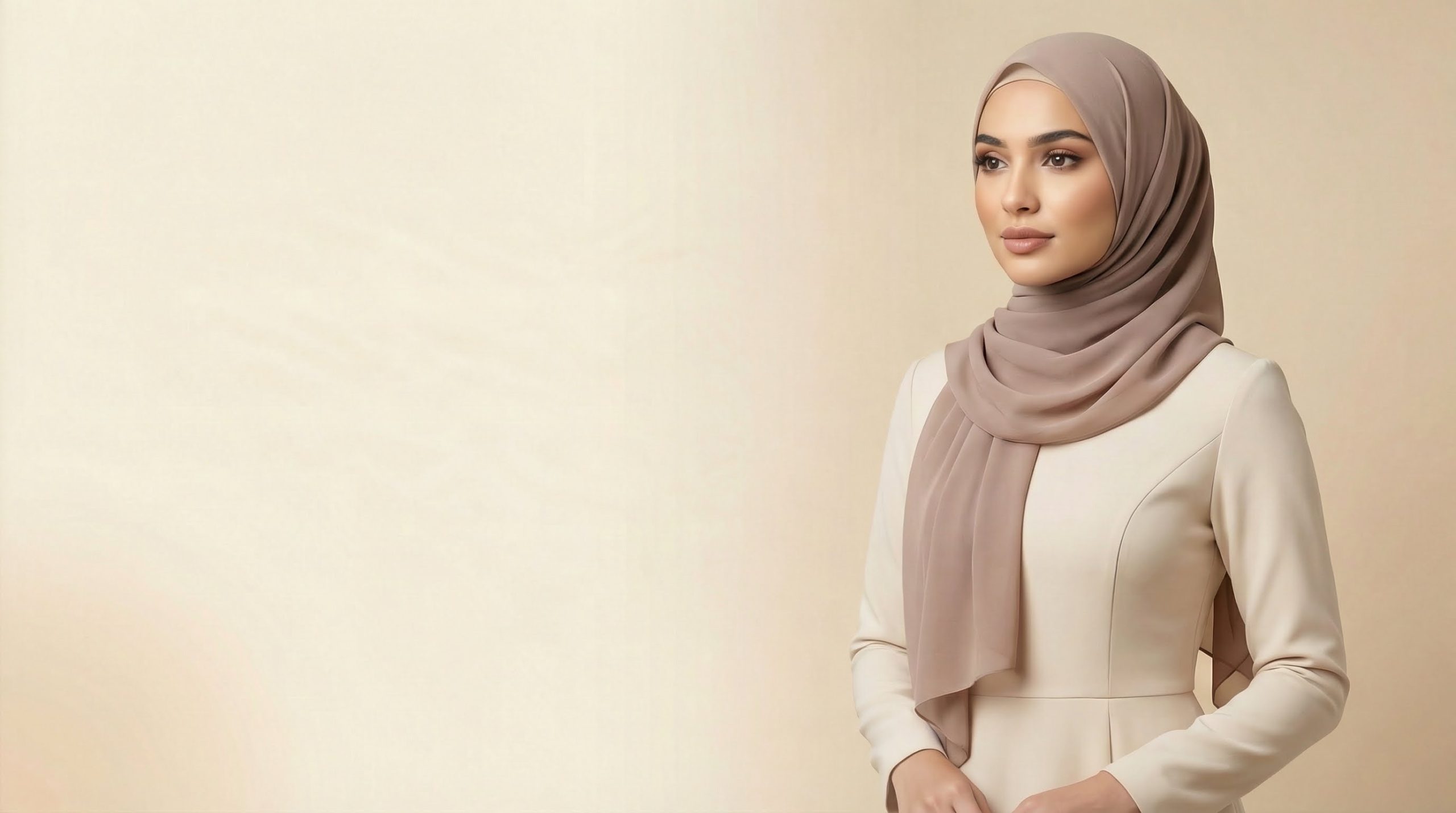
Pair this with a chiffon hijab for a light, flowing finish, or use georgette if you want something with a bit more structure and sheen for evening occasions.
The Side Drape
Understated but genuinely stylish. Place your hijab on your head slightly off-centre, pin it loosely under one side of your chin rather than directly beneath it, and let the longer end fall diagonally across your chest and over your shoulder in one soft sweep. The asymmetry is what makes it interesting. It feels modern without trying too hard, and it works on nearly every face shape because it draws the eye sideways rather than straight down.
If you’re going for this look, stick to solid colors or very subtle patterns. The drape itself is the focal point and a busy print will compete with it.
The Full Coverage Style
For women who want maximum coverage without sacrificing elegance, the full coverage style wraps the hijab so it lies flat across the chest and covers the shoulders completely with no gaps. Start with a longer hijab, drape it evenly on both sides, cross the two ends behind your neck and bring them forward over each shoulder, then pin them in place at the chest. It sounds involved but the result is neat, modest, and incredibly comfortable because nothing shifts during the day.
This style pairs naturally with a burkha or abaya. If you’re new to modest dressing and exploring the full range of what that looks like, reading about the purpose of hijab before getting into styling can genuinely change how you approach the whole thing.
The Casual Everyday Wrap
Some days you need a style that goes on in under two minutes and still looks intentional. This is it. Throw your hijab over your head, let both sides hang at roughly equal lengths, twist the two ends together loosely once, and tuck them up under the back of the scarf. No pins. No fussing. It looks relaxed and effortless, which is exactly what a Tuesday morning calls for.
The Turban Style
The turban has made a real comeback in modest fashion and for good reason. It works for bad hair days, for women who prefer a sleeker profile, and for anyone who wants a modern, minimal look that still provides coverage.
Fold your hijab into a long strip, place the centre at your nape, bring both ends forward over the top of your head, cross them once, wrap them back around your head, and tuck the ends in securely. What you get is a clean, close-fitting style that looks polished with a plain abaya and quietly striking with a more structured outfit.
A Few Things That Make Every Style Better
The fabric you choose matters as much as the folding technique. Light breathable fabrics like cotton work best for everyday wrapped styles. Chiffon and georgette drape more elegantly for formal or layered looks. Velvet and heavier weaves hold structured styles better in cooler months.
Your undercap matters too. A non-slip undercap means fewer pins, less adjusting, and a style that stays where you put it. The difference between a hijab that holds all day and one that migrates to the back of your head by noon is almost always the undercap.
And honestly, the most important thing is wearing the style you feel most comfortable in. Confidence changes how any drape looks on a person. Pick the one that makes you walk differently and start there.
Find hijabs in every fabric, color, and style you need at Hijabo.in* because the right fabric is half the style.